Ground Mounted Solar Panels#
There are a variety of ways to have ground mounted solar panels, at the most basic it can be just putting panels on the ground and wiring them up to generate power and at its most complex can be constructed on angled platforms that exist over farmland creating a dual land usage known as agrivoltics.
Just lying your panels on the ground is often how people first start, this temporary option is very easy and allows you to start to get to understand how panels work and how you can use them. There are obvious disadvantages, flat panels aren’t angled at an optimum angle so won’t generate as much power, they also take up a lot of space, if put over vegetation will likely block the sun and kill the plants underneath. There is also the risk of damage to the panels if they are unintentially walked over.
Propped#
A simple way to improve on flat panels is to simply prop them up, this can be either by leaning them onto an object or perhaps adding some simple struts on one side to angle them up.
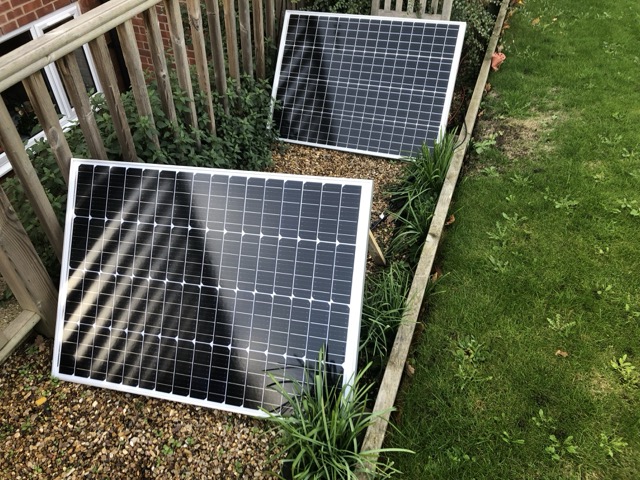
2 small solar panels propped up by pieces of wood on a gravel strip, credit: smallsolar
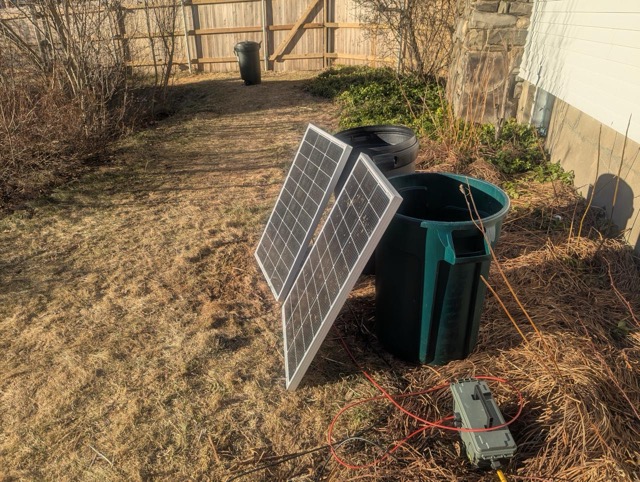
2 100W panels propped up against 2 garbage cans/bins, credit: ToroidalCore
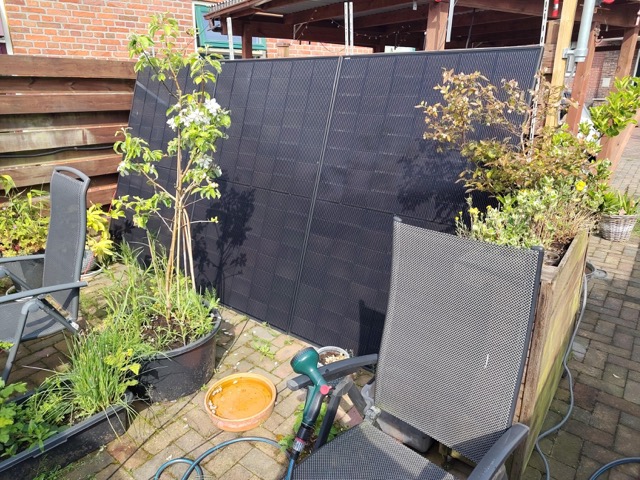
3 Panels setup in a garden, there are some plants in front of the panels, credit: anthropy
Frame Mounted#
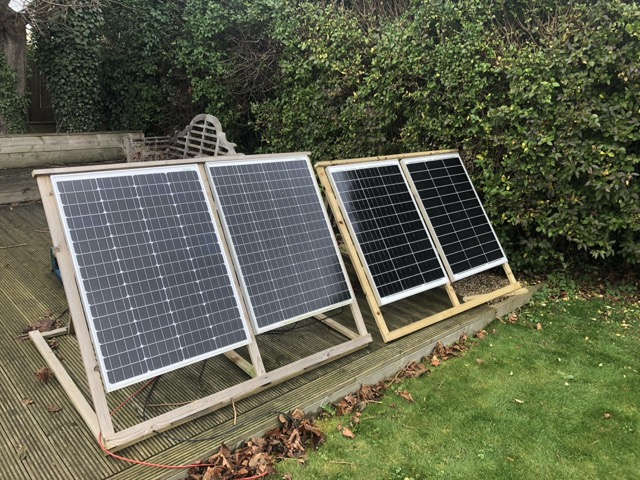
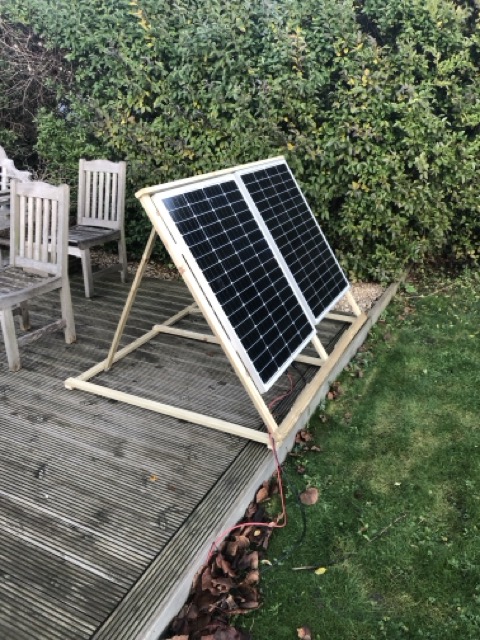
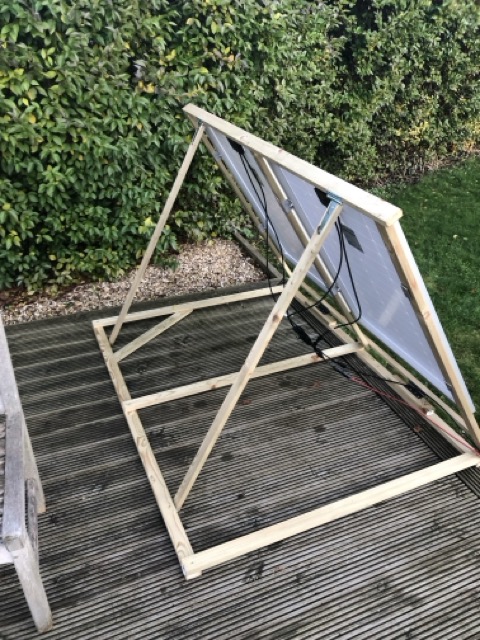
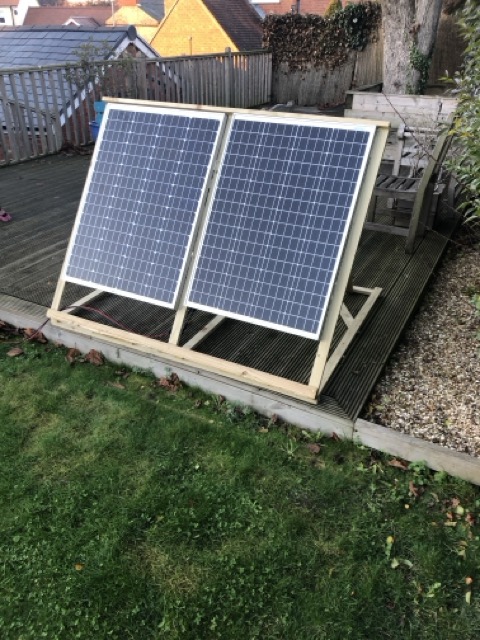
The next step up is to mount a panel or two into a frame that angles them more optimally, wood is a good choice and a frame is unlikely to be expensive
Construction Guide#
Components#
- Wood
- 2 Solar Panels (these are 120W Ecoworthy Panels)
- 4 Z brackets
- 2 Butt Hinges
- 2 T-hinges
- 2 Door Hasp & Staple Wire (this is to make the frame foldable, you could use T-hinges instead if more permenent)
Panel Frame#
- On a flat surface position the two solar panels in the configuration you want, its recommended to have the portrait and side by side. You’ll want to have your panels positioned at the top of the frame with a gap at the bottom. Secure the Z brackets to the panels.
- Build a frame of wood around the panels and then secure the panels to the frame with the Z brackets. The panels add strength to the frame.
Base Frame#
- Measure your panel frame, you then want to construct a similar sized frame for the base, as there are no panels it can be a bit unstable, this can be strengthened by adding a diagnonal piece of wood to stop it flexing.
Putting it together#
- The 2 frames are joined by the 2 Butt Hinges so that the whole frame can folded down flat. Use one large butt hinge for each panel, it might be necessary to raise the hinge off the base frame with some of the off cuts of wood so it sits higher as this will allow the frame to fold down.
- The T-hinges are used at the top of the panel frame to secure the wooden struts, at the bottom of the strut you can just wedge the wood against the frame but using a Hasp and Staple Wire allows you to secure it so it doesn’t slip.
Installation Tips#
- It might be necessary either secure your frame down with weights or screw it down as it can easily get blown over in strong winds.
Low Angle Mount#
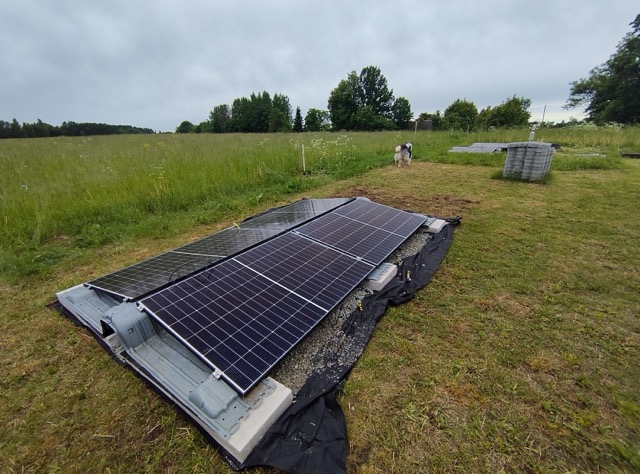
8 solar panels with a low profile setup, credit: Flaki
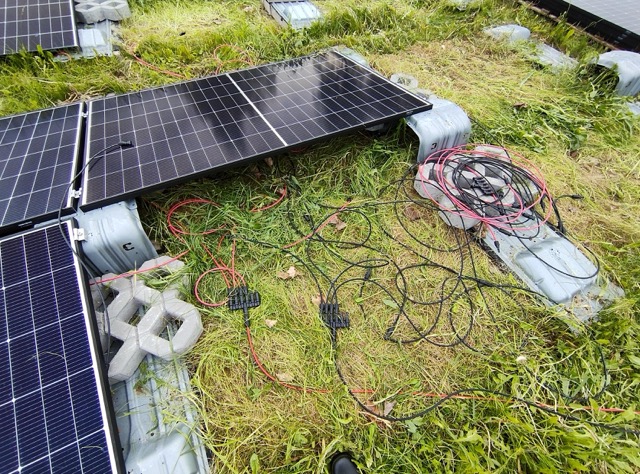
Low profile setup using metal aluminium mounts, credit: Flaki
- This setup uses stamped aluminum mounts from Voestalpine, called “iFix”. It’s originally intended for industrial flat-rooftop solar, but it happens to be a fairly cost-effective and robust (for a DIY setup) solution when placed on concrete blocks.
Advanced Frames#
There are a vast range of advanced ground mounted systems available, you can see them being used to create solar farms, often these mounts are designed to raised the panels significantly off the ground. The mounts are usually made of lightweight metal such as aluminimum and are very robust. They aren’t though particularly stealthy.
There is however a sub group of professional mounts which are designed to be less intrusive, they are often low profile panels and might be hidden from sight by a small berm. They are often installed next to a tree line with a downhill slope, the berm blocks the view but won’t block the panels from the sun. The Solar Shed have good examples of this. Pros of this approach include easy installation, easy maintence and probably lower costs. The issues might come from having the right location and also will need to ensure that plants don’t grow up and block the sun.